
Fumonisins Alert: Above-Average Levels Impacting Last Year’s Silage Crop
The Diamond V team has been closely monitoring mycotoxin levels from forage samples and have noted above-average levels of Fumonisins in your region in the database. These levels pose significant risks to your herd’s performance and health.
What to know about Fumonisins
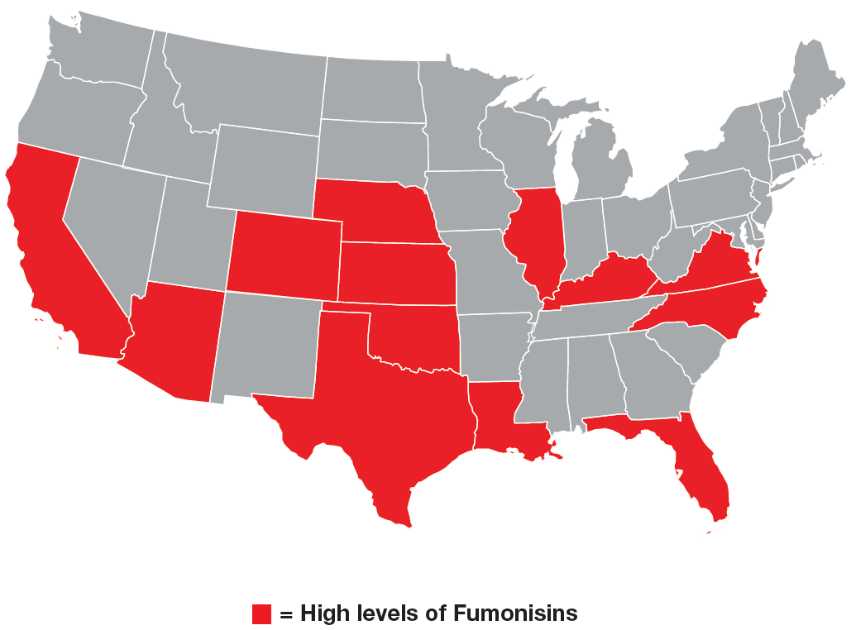
Fumonisins are mycotoxins that can contaminate grains, grain by-products, and especially corn silage—posing a risk to herd health and performance. This mycotoxin starts in the fields during crop growth, especially in warm, dry conditions that are followed by wet weather.
- Optimal growth range: 71–86°F, especially in late-harvested or drought-stressed corn.
- The most toxic form is Fumonisin B1 (FB1), with FB2 and FB3 being less potent.
- Contamination can persist—or worsen—during poor ensiling, especially if oxygen is present.
Risks to your herd
Fumonisins pose risks to dairy cattle when present in silage at certain levels. At elevated levels fumonisins may cause a variety of adverse health consequences and at lower levels they may impact animal performance. The impacts on animals are dependent on the species, age, health status, and nutrition. While ruminants are more resistant than other monogastrics to this mycotoxin, they are not immune to effects which can include:
- Medium Performance Risk (4.5 – 9.0 ppm): May negatively impact feed intake, compromise immunity, and decrease milk production.
- High Performance Risk (> 9.0 ppm): May have higher disease susceptibility, increased susceptibility to metabolic disorders, liver damage, decreased milk production.
When the concentration of fumonisins is high in silage, limiting that silage to at-risk animals, such as heifers and pregnant cattle, is the best practice. More broad-spectrum solutions can include adding gut health additives to a ration.
Feedstuffs with concentrations above regulatory levels should not be fed.
Taking action
A combination approach that addresses feed storage, testing, and feedout offers the most protection to cow health and production.
- Check for damage to plastic covers regularly and repair promptly.
- Use a clean, tight-face management technique (e.g., shaving rather than tearing silage).
- Remove enough silage to keep ahead of spoilage. Depending on silage density and the VFA profile, this can be as little as 1 to 2″ per day or as much as a foot.
- Stay current with mycotoxin risks in your area; your Diamond V representative is a resource.
- Monitor animal health closely—look for reduced intake, performance loss, and health issues.
- Test silage for mycotoxins at least once per season, particularly if there are symptoms in cattle or visible mold.
- When collecting a sample of silage for any analyses, it is always best to collect the silage sample from the defaced and premixed silage pile that is prepped and ready for feeding.
- Mycotoxin levels vary throughout the silage pile due to differences in corn varieties, fields, etc. Defacing and premixing the forage, typically by lifting and dumping with the loader bucket, results in the silage being more uniform in all aspects and reduces the risk of any group of cows getting feed with particularly high mycotoxin levels. Do not deliver feed with elevated levels of mycotoxins to the herd
- Use of anti-mycotoxin agents may reduce mycotoxin impact. Consider adding a mold and yeast inhibitor to the ration if the TMR is heating or spoiling before bunk cleanout.
- Incorporate supplements that support gut health and the immune system as recommended by your nutritionist. The gut plays a significant role in mitigating mycotoxins once consumed and products that support gut health can help boost the immune system.
Knowledge is your best defense!
Work with your Diamond V representative to stay informed of local risks, sample your feed regularly, and build a ration strategy that protects your herd from the invisible threats that can erode your herd’s performance.
Fill out the form below to have a Diamond V representative connect with you.