Every dairy in the U.S. has experienced the effects of heat stress on dairy cows. There are a variety of management practices dairy producers c an use to proactively address heat stress before it happens or support the herd to lessen the impact once it arrives. Yet with all that we know about managing and mitigating heat stress, there are still misconceptions.
We’ve identified several myths associated with heat stress based on the hundreds of dairy operations we’ve visited across the country.
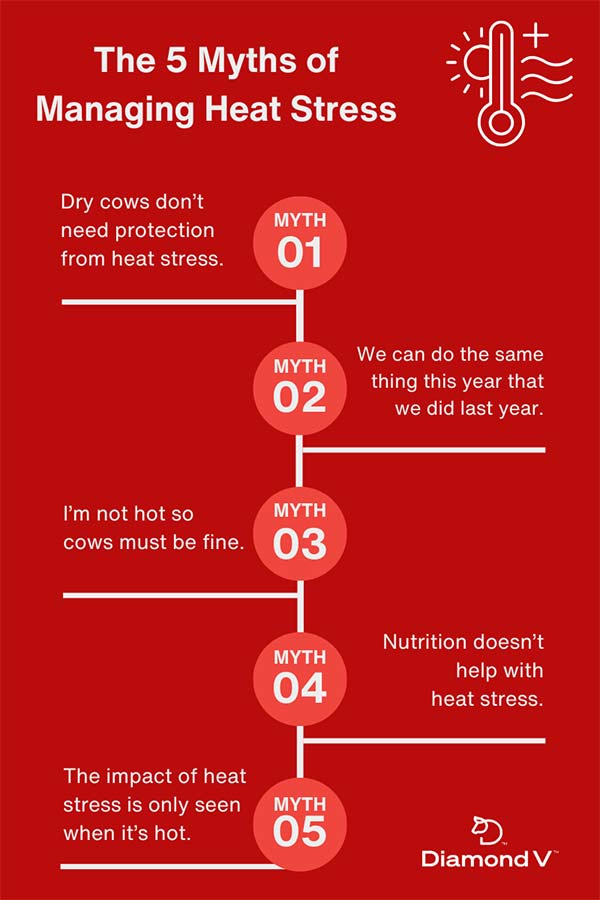 Myth 1: Dry cows don’t need protection from heat stress.
Dry cows may not be lactating, but they’re still metabolically active—especially late gestation. Heat stress during this phase affects colostrum quality, calf birth weight, calf immune development, and the cow’s ability to transition successfully into the next lactation. If you’re implementing heat stress abatement practices for your lactating herd, make sure you include dry cows as well.
Myth 2: We can do the same thing this year that we did last year.
Each summer is unique. Your cows are another year older, and some may not have experienced what it’s like to have to make milk when they’re hot. Plus, your cooling equipment is another year older as well. Clean or replace fans and valves in your misting system.
Consider your herd numbers. In this current dairy environment, heifers are scarce and expensive. Producers may be holding on to more animals. There may be more cows in the barn this summer compared to last year; you’re at 120 percent capacity today versus 95 percent capacity last year. That will have a big impact on your ability to keep the herd cool.
Myth 3: I’m not hot so cows must be fine.
Here’s a shocking revelation – cows and humans are not alike. While we may be comfortable walking around the dairy on a beautiful 70-degree day, your cows are already starting to experience heat stress. Additionally, to really feel the effects of heat stress we need to be where the cows are. The feed alley may feel airy and cool, but the condition in stalls or near headlocks could be a different (hotter and humid) story.
Also cow’s body temperature lags environmental temperature, so while the environmental temperature may peak in late afternoon, a cow’s body temperature continues to rise for several more hours, peaking closer to 9 pm. So even though the sun goes down and you’re feeling cooler, keep cooling mechanisms working.
Myth 4: Nutrition doesn’t help with heat stress.
Diamond V has done a significant amount of research that shows that changes and additions to the ration can help cows manage heat stress. There are a few basic things you can do—increase energy density, include highly digestible forages, feed a ration with a positive Dietary Cation-Anion Difference (DCAD).
Additionally, Diamond V™ Ice Plus supports cows during the challenges of heat stress season. It features a unique, proven synergistic blend that helps lessen the heat’s impact on milk production and
reproductive health by supporting cow cooling at the cellular level.
Myth 5: The impact of heat stress is only seen when it’s hot.
The impact of heat stress can be seen far beyond the heat of summer. Cows that freshen in hot weather have an anchor on the early days of lactation that will impact their productivity well into the lactation. Cows that don’t conceive when bred during heat stress will add more days to their lactation and more services until they get pregnant.
We’ve learned a lot about how to help cows navigate heat stress without a significant reduction in intake and productivity. But there are still many myths, and we need to rely on results of sound research to help us understand what’s real and what’s not. As always, partner with your nutrition team—your Diamond V representative, nutritionist and veterinarian—on a plan that works for your cows and your dairy.