
Immune system - CONSTANTLY DEFENDING GOOD HEALTH
All animals — and humans — come into the world with an immune system that provides protection for their health, proven effective over countless generations.
A growing body of research shows that what animals eat or drink can affect the efficiency of the immune system. Interpreting such scientific findings and knowing what questions to ask for practical guidance requires a basic understanding of the immune system.
The animal’s skin and epithelial tissues provide a barrier to keep pathogens outside the animal. If, however, viruses or bacteria get past the barrier, the immune system springs into action.
The health of cattle, pigs, poultry, and other vertebrates benefits from both innate immunity and adaptive immunity. Effective vaccination depends on adaptive immunity.
WHAT IS INNATE IMMUNITY?
…the first line of immune defense against a wide variety of pathogens
WHAT IS ADAPTIVE IMMUNITY?
...targeted protection against specific
disease-causing agents
Immune Strength for All
Diamond V® postbiotic feed additives* work naturally* with the biology of the animal to support immune health across food animal, companion animal, aqua, and other species.
FREQUENTLY ASKED QUESTIONS
Even the simplest forms of life include health defense systems inherited from their genetic predecessors. Evolving over billions of years, immune systems now help protect the health of countless species, including humans and food animals.
No — although all immune systems have a similar role and many features in common. Shrimp, for example, are crustaceans with an exoskeleton rather than a backbone and internal skeleton. Shrimp benefit from a form of innate immunity, whereas vertebrates, animals with a backbone, including most fish and all poultry and livestock, have both innate and adaptive immunity.
A healthy gut, or GI tract, is essential for optimal immune function because it is a primary source of immune cells that fight disease throughout the body.
A healthy gut is a well-developed organ with strong tissue integrity. It’s also home to a large and healthy population of beneficial microorganisms that help support the immune system.
Extensive research shows the bioactive compounds in our postbiotics work naturally with the biology of the animal, maintaining immune strength and promoting digestive health in many beneficial ways – in every stage of life.
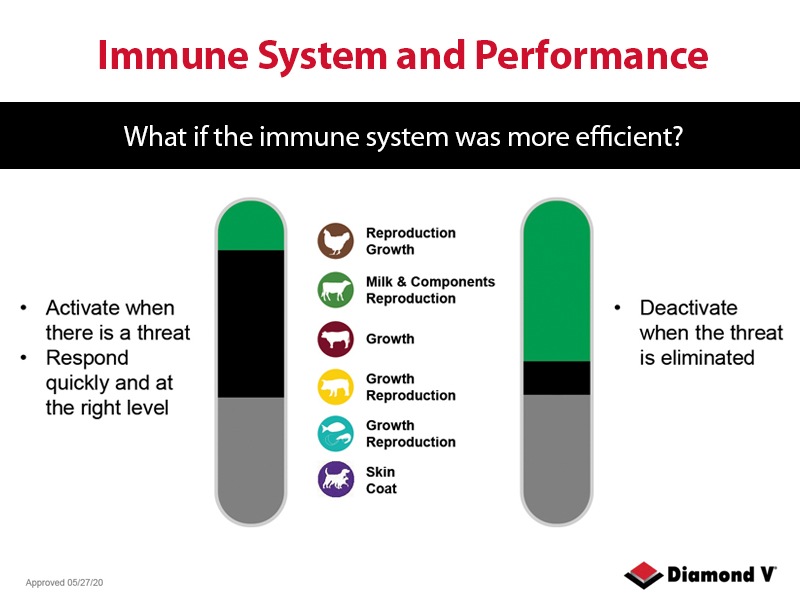
Our immune system is a highly sophisticated and effective health defense system. We don’t want to “boost” or stimulate it too frequently or unnecessarily, as that can cause problems and waste metabolic energy.
Rather, we want to protect the immune system and support it.
Diamond V scientists continue to develop a large and increasingly significant body of research to better understand immunity in people and animals. Their work define the most effective and efficient ways to support immune function at home and on the farm.